Trenching
Trenching Services in St. Joseph and the Kansas City Metro
Power to a shop, a water line, a drain run, a new stretch of conduit. We cut the trench with whichever machine fits the yard.
Licensed and insured in Missouri and Kansas · Free estimates
Two machines, one crew
Trenching services are a piece of what got Ferry Construction & Excavation started, and it still stands on its own, no building attached.
Homeowners call about power to a detached shop or a new light fixture out by the driveway. Rural property owners need a water line run out to a barn. Builders need conduit or drain lines in before a pad gets poured. Whatever's going in the ground, we pick the machine that matches the job and the yard it's happening in, from St. Joseph out through the Northland and across the Kansas City metro.
Trenching sounds like a small job until you're the one staring at a shovel and a long stretch of lawn. A machine cuts a straight, consistent trench in a fraction of the time hand digging takes, and it does it at a steady depth the whole way, which matters once whatever's going in the ground actually has to work.
Two ways we cut a trench
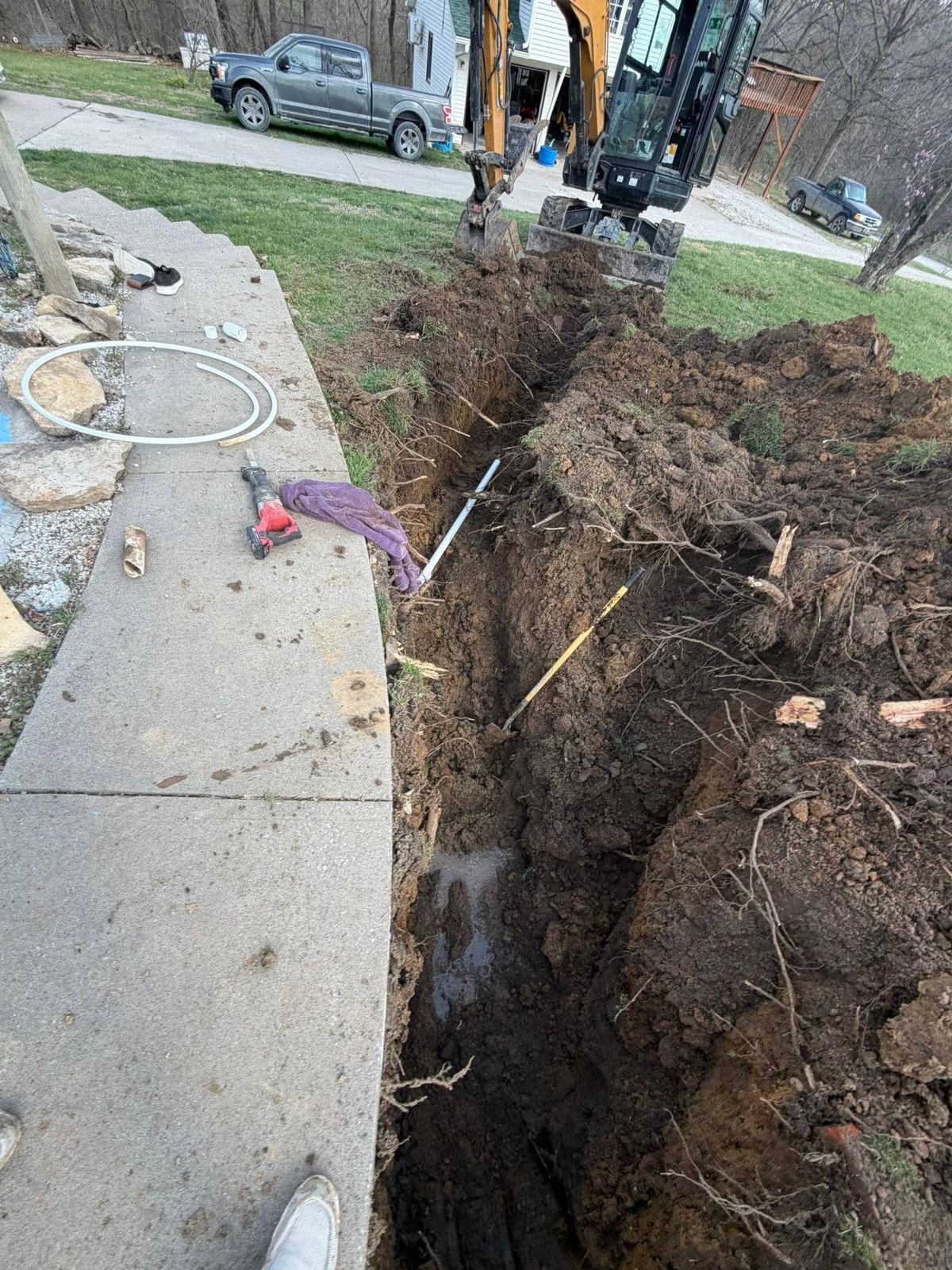
Compact excavator
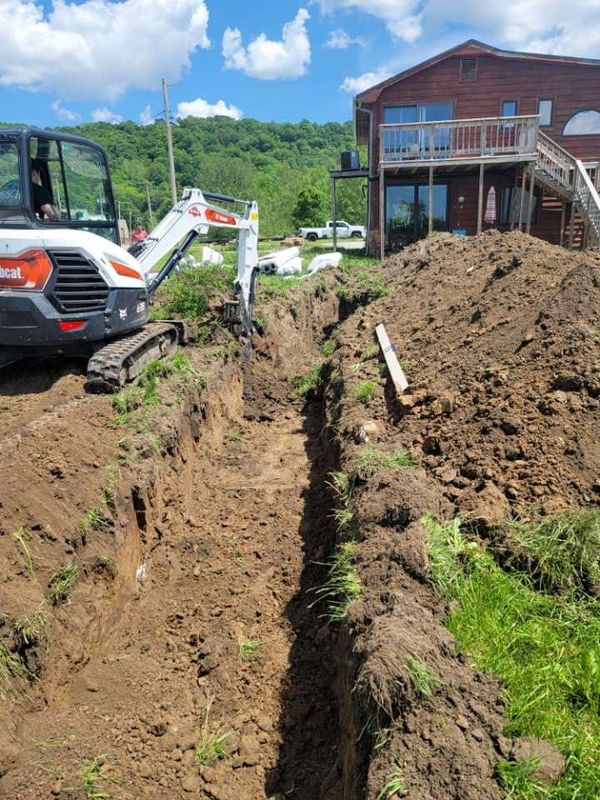
For longer runs, deeper trenches, or ground that's rocky or packed hard. Faster on open lots and rural acreage where there's room to work.
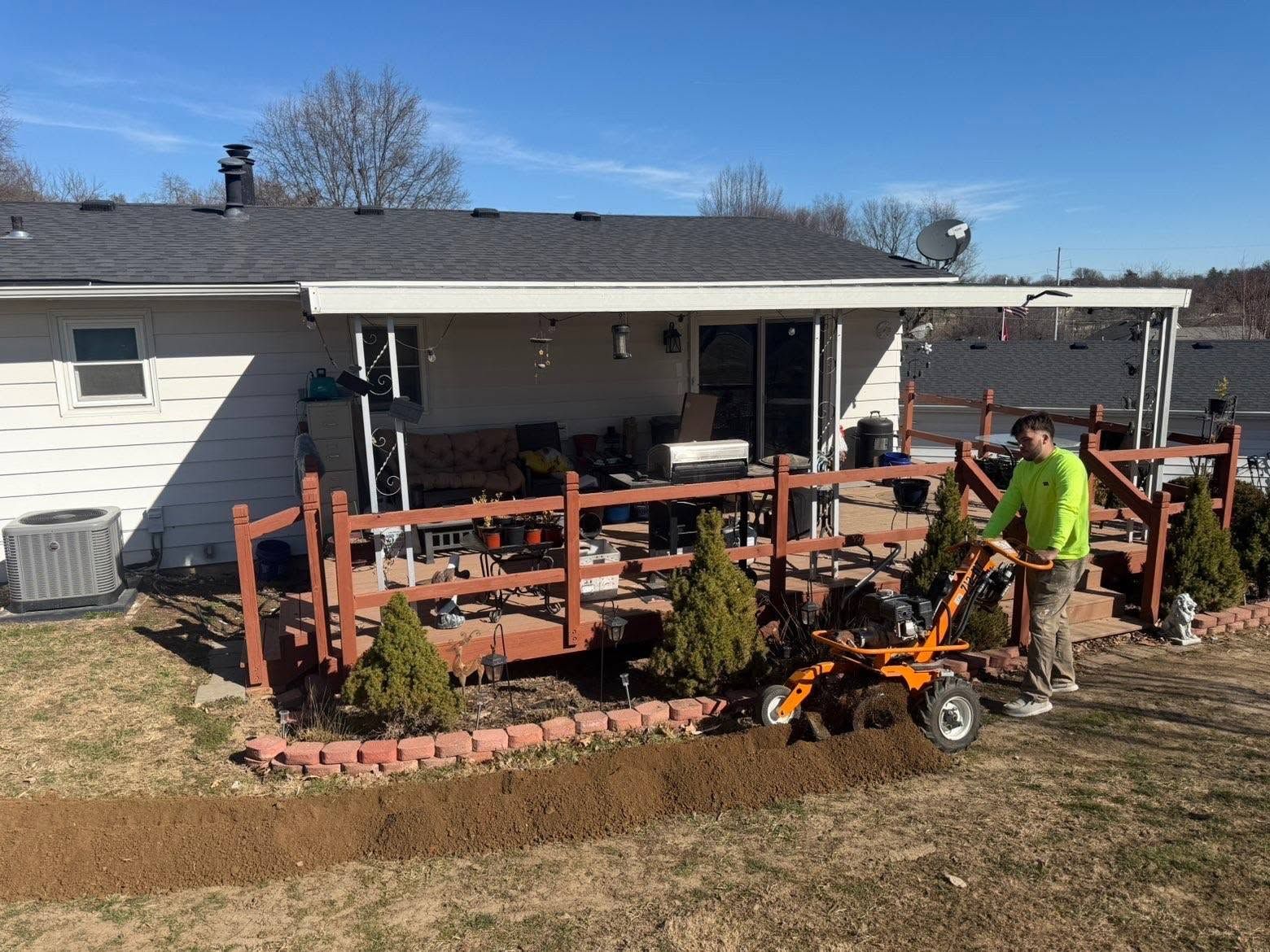
Walk-behind trencher
For narrow, precise cuts in a finished yard, along a landscape bed, close to a fence line, or anywhere a wide excavator bucket would tear up more lawn than the job needs.
What we run through a trench
- Power to outbuildings. Trenching electrical runs out to a detached shop, garage or barn.
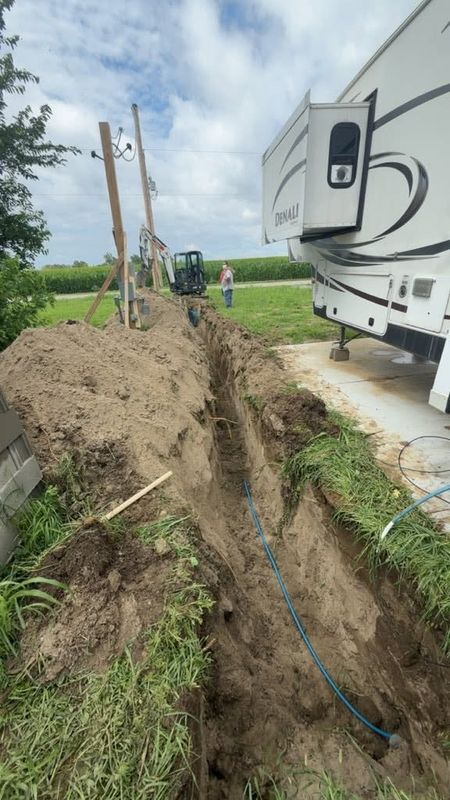
- Water lines. Running water service out to a second building, a hydrant, an RV pad, or a spot that never had one.
- Conduit. Open trenches for conduit protecting wiring headed underground, backfilled once the line is set.
- Drain lines. Cutting drainage trenches to move water off a wet spot in the yard or away from a foundation.
- Low-voltage and invisible-fence runs. Shallower, narrower cuts for wire that doesn't need the depth a deeper utility run does.
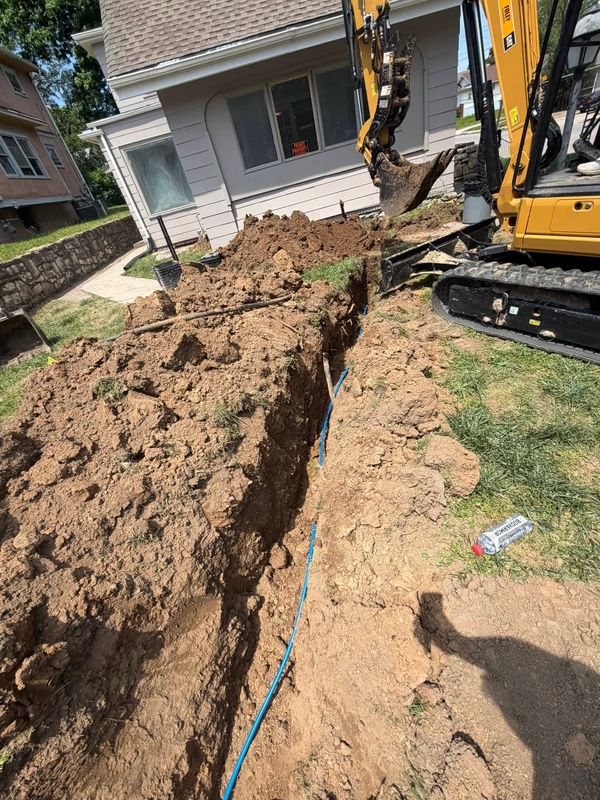
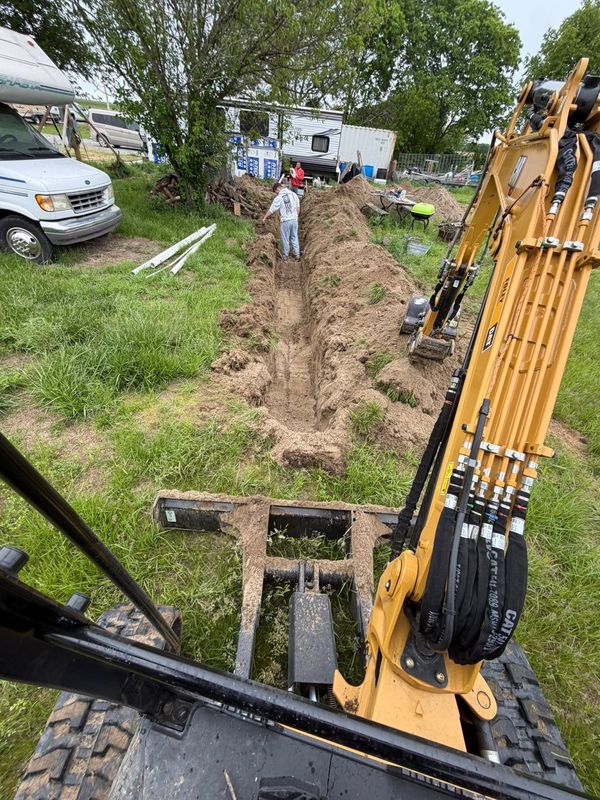
Trenching examples
Calling in the locate first
- Tell us what's going in. Call or text with what you're running, power, water or drain, and roughly how far.
- 811 gets called. Before any digging starts, we get a locate called in so existing buried lines are marked. It's a normal step on every trenching job, not something extra.
- You get a quote. A price based on the length, depth and ground conditions, before the trencher or excavator shows up.
- We cut and set the line. The trench gets dug to depth, whatever's going in gets set, and the run gets checked before backfill.
- Backfill and restoration. The trench gets filled back in and the yard put back close to how it looked, with the trench line restored.
What affects your trenching price
Length and depth are the two biggest drivers: a shallow low-voltage run costs a lot less than a deep water line. Ground conditions matter too: sandy soil moves fast, clay and rock slow the machine down. Access plays in as well: a trench cut across open pasture is a quicker job than one that has to thread between a fence, a patio and a mature tree. Restoration is its own factor: a trench through a finished lawn takes more time to put back right than one across bare dirt.
Whether the excavator or the walk-behind trencher does the cutting changes the number too. The trencher is the right call for a narrow, careful cut, but it moves slower foot by foot than the excavator does on an open run. Tell us what's going in and roughly where, and the quote will reflect the machine and the ground, not a flat rate for every trench.
Trenching services across St. Joseph and the KC metro
We trench on everything from tight in-town lots to open acreage where a run has to cross a long stretch of pasture. See more of our trenching work.
- St. Joseph, MOour home base
- Platte City, MOpower out to shops on acreage
- Smithville, MOlake-area water lines
- Gladstone, MOtrenching in finished, established yards
- Overland Park, KSsuburban lots
See every town we cover on the service area page.
Trenching questions
Do you call 811 before you dig?
Yes, every time. Getting existing lines located and marked happens before the trencher or excavator ever touches the ground.
Which machine will you use on my job?
Depends on the run. Longer or deeper trenches usually call for the excavator. Narrow cuts through a finished yard or landscape bed usually call for the walk-behind trencher.
Will trenching tear up my yard?
There's some disturbance along the cut. That's the nature of putting something underground. We backfill and restore the trench line once the work is in, and pick the narrower trencher when the yard calls for it.
Can you trench for a water line to a barn or shop?
Yes. Running water or power out to a second building is work we do for rural properties.
Do you also do the excavation for a new build?
Same crew, same equipment. See our excavation and grading page for pad and foundation work.
How deep do you dig?
Depth depends on what's going in the trench, a low-voltage wire and a water line aren't the same job. We'll set the depth to fit what you're running.
Related work
Excavation & Grading
Pads, footings and grading for the jobs that need more than a trench line.
New Construction & Framing
Conduit, water and drain lines go in as part of a new build before the pad is poured.
Have a project in mind?
Call or text us with what you need and where it is. Estimates are free. Licensed and insured in Missouri and Kansas.